
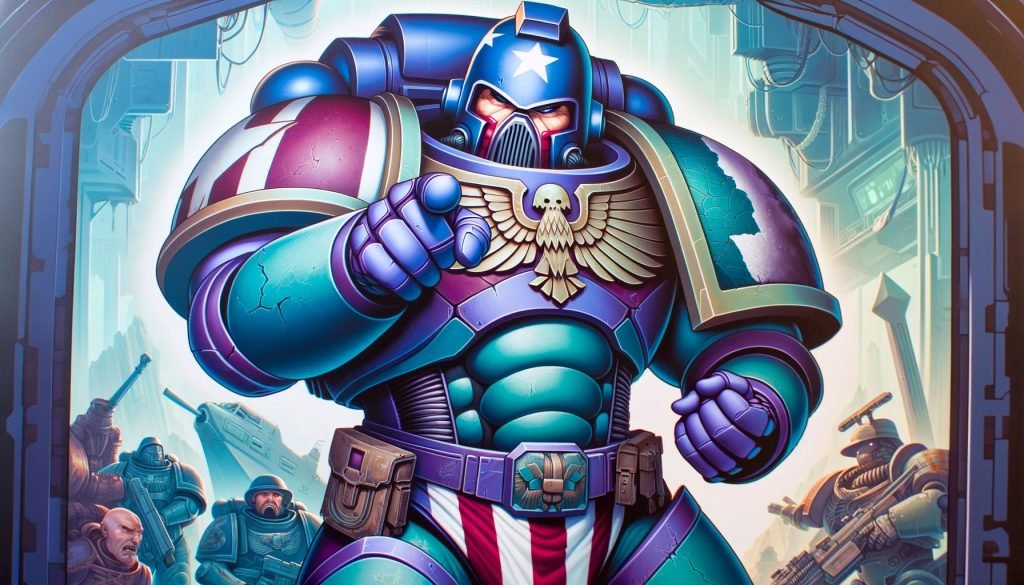
The new editon of the Warhammer 40,000 skirmish game Kill Team has arrived, and almost everything has changed compared to the previous edition – most of it for the better. In this guide, we go through what you need to play the game, what you need to know about how it plays, and what we think of the new rules. In short, it is our Kill Team Beginner’s Guide.

Divulgación de enlaces de afiliados
Age of Miniatures cuenta con el apoyo de los lectores. Al comprar a través de los enlaces de nuestro sitio, podemos ganar una comisión de afiliación. Más información.
¿Qué es Warhammer Kill Team?
Kill Team es un juego de escaramuzas de Warhammer 40.000. Esto significa que, mientras que las partidas normales de Warhammer 40.000 se caracteriza por grandes ejércitos con muchas unidades, vehículos y personajes diferentes, Kill Team trata de un pequeño grupo de soldados luchando contra otros pequeños grupos de soldados. También controlas a cada modelo individual en lugar de a toda una unidad a la vez. Esto hace que el juego sea muy diferente de los grandes juegos de guerra de sobremesa: Cada modelo tiene un papel en el juego, y puedes involucrarte mucho en la historia de tu pequeño equipo y sus oscuras aventuras. Este tipo de juegos también se denominan Juegos de Escaramuzas.
La versión actual de Kill Team is the second since the game was relaunched after the release of Warhammer 40,000’s eighth edition, but the idea of playing 40k with small squads has been around for a long time. In this new edition, however, Games Workshop has taken a big step fuera from 40k rules, so if you’re used to playing 40k, Kill Team will feel very new to you. If you’re new to the 40k universe, Kill Team is a fast-paced tactical tabletop experience with great depth but also a very streamlined play experience without some of the older idiosyncrasies of Games Workshop design.
Dado que Kill Team se basa en el universo 40K existente y sus gamas de modelos, ya hay docenas de facciones (puedes ver todas las Facciones de 40k aquí) para que construyas equipos de asesinos, pero en esta nueva edición también se lanzan cajas a medida de modelos construidos principalmente para Kill Team, así que nunca ha habido mejor momento para subirse a bordo de este gran juego de escaramuzas.
Si necesitas una visión general de todos los Kill Teams actuales, aquí la tienes.
El modo de juego de Kill Team es básicamente el siguiente:
You assemble a kill team of soldiers from a specific faction, and pit them against another player’s kill team in a specific mission which is played on a game mat with sculpted scenery for your soldiers to cover behind or climb up on. You take turns moving and fighting with one or more models (depending on their rules), using custom measuring tools to measure distances, and using dice to resolve shots and melee combat. After a few rounds, the game ends, and the mission objectives determine which team wins.
Además, a muchos jugadores les gusta jugar en campañas en las que varias partidas se enlazan para formar una historia coherente, y el juego tiene reglas para mejorar a tus luchadores entre partida y partida.
More on all that below! Let’s take a look at the game’s background story.
Historia de Kill Team
La versión ultracorta de la historia de Warhammer 40.000 es más o menos así:
En un futuro lejano, la Humanidad se ha extendido por toda la galaxia como el Imperio del Hombre, gobernado mediante el miedo y la burocracia por los adoradores del Emperador de la Humanidad, un poderoso ser sobrehumano que, aunque casi muerto, guía su imperio desde el planeta Tierra, ahora conocido como Santa Tierra.
Con miles de millones de soldados humanos ordinarios, órdenes militares religiosas y los superguerreros posthumanos llamados Marines Espaciales, el Imperium lucha en una guerra constante y sin cuartel por la supervivencia contra todo tipo de especies alienígenas, así como contra una miríada de adoradores de las Fuerzas del Caos, que casi destruyeron el Imperium hace 10.000 años, convirtiendo mundos enteros, así como algunas legiones de Marines Espaciales, a su causa hereje.
It’s a dark and bombastic fictional universe full of war on a massive scale, where millions of soldiers fight battles across solar systems all through the galaxy. Towering war machines, devastating daemonic invasions and orbital bombardments constantly destroy entire worlds, and the apocalypse is always just a minute away.
Kill Team lore takes place in that same universe, but it abandons the grand scale in favour of a focus on all the individual soldiers carrying out heroic and/or suicidal missions that might not seem like much in their own right, but which can still turn the tide of war. It’s about the squad of Imperial soldiers giving their lives to call in an airstrike on an Ork stronghold, or the undercover team of Genestealer Cultists sabotaging a weapons factory.
El libro básico de Kill Team hace un excelente trabajo convirtiendo la tradición de 40K a esta escala más pequeña, con montones de ejemplos de las misiones que cada facción del juego encomendaría a sus equipos de matanza, y hay montones de fragmentos de historias y citas de soldados de los equipos de matanza esparcidos por las páginas del libro. Libros de expansión como el de la Octarius starter te da aún más detalles, contándote la historia de una zona de guerra específica y lo que hacen allí los equipos de asesinos de las distintas facciones.
The best thing about Kill Team lore in the Core Book, however, is that it doesn’t just nail the smaller scale, but it also sees the Warhammer 40,000 universe from the perspective of relatively ordinary men and women in the Imperium’s army. This means that none of the propaganda about the perfection of the Imperium you might be used to from Space Marine warcries or the darkly humoristic Imperial “infomercials” on the Comunidad Warhammer site is in there to make things look better than they are: when you’re an ordinary soldier, fighting for the Imperium against the horrors of the galaxy is just plain terrible, and the writers of the lore section in the Core Book has pulled that feeling off in a way I haven’t seen 40K lore from rulebooks do in a while.
El estilo de la historia de Kill Team también lo convierte en un gran escenario para construir tu propio Kill Team:
You know that they’re going to be up against terrifying odds, and that all that stands between them and destruction is the soldier next to them, so everyone in your Kill Team is fighting for their comrades as much as for whatever faction they’re in.
I sometimes skip past the lore section of GW rulebooks because I feel like I’ve heard it all before, but the tone and style of the Kill Team lore really caught my attention.
Let’s hope they keep that standard up across their publications for this edition.
¿Qué tengo que comprar para jugar a Kill Team?
Para jugar una partida de Kill Team, necesitas los siguientes elementos:
- Una copia del Libro principal de Kill Team para las reglas del juego (si va a comprar un juego de iniciación para empezar, asegúrese de que contiene las reglas básicas)

El Core Book de la segunda edición de Kill Team es imprescindible para el juego. Aunque puedes conseguir sólo una copia del libro, también puedes conseguirlo a través del Set de inicio Kill Team.

- A publication with the rules for your Kill Team – this could be the CompendioEl Libro de expansión de Octarius o una revista de la Enana Blanca. Consulte nuestro Artículo sobre la facción Kill Team to see where your Kill Team’s rules can be found

- Medidores Kill Team o cinta métrica

- Dados de 6 caras y fichas
- un tapete de juego y decorados, como un Killzone box o un starter set

- miniaturas para representar a tu Kill Team
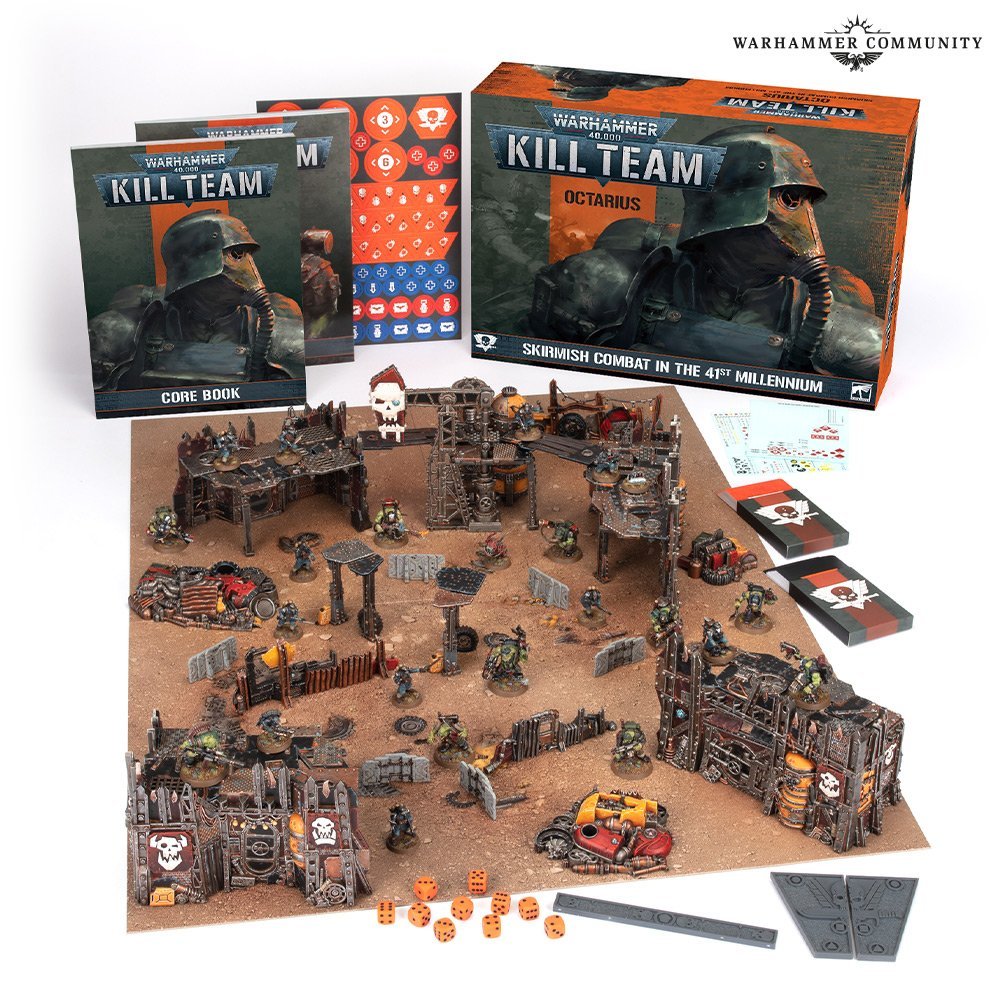
La forma más fácil de entrar en el juego ahora mismo es hacerse con un set de iniciación como el Caja Octarius, which includes Core Rules, two kill teams, a Killzone and all the tokens, measuring gauges and dice you need to play. There are plenty more of these boxes on the way, and we’ll update this section with them as they show up.
Octarius
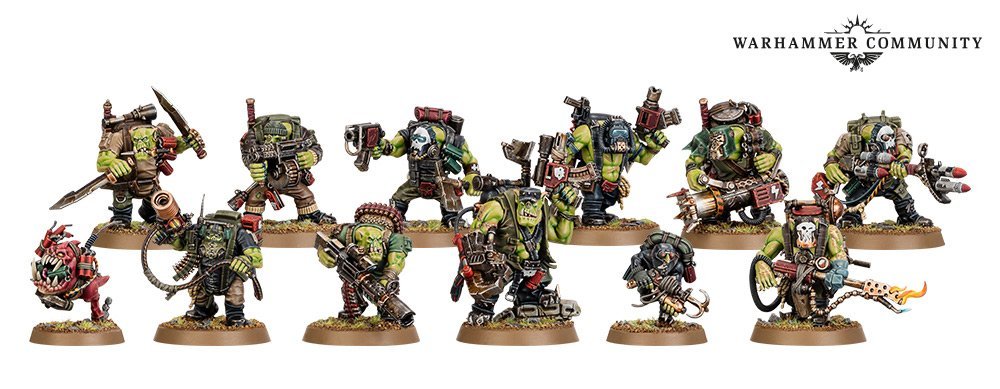
La caja Octarius cuenta con un Ork Kommandos matar equipo y otro para el Death Korps of Kriegasí como un impresionante desguace orko killzone y todos los accesorios que necesitas para jugar. Simplemente la mejor manera de entrar en el juego en este momento.
Resumen de las reglas básicas de Kill Team 2.0
Tarjetas de datos en Kill Team
Las reglas de cada uno de los agentes de tu Kill Team se encuentran en su ficha, que es un pequeño resumen de todas sus habilidades y estadísticas. Cada ficha contiene la siguiente información:
- Tipo operativo: Esto te indica el rol del operativo, lo cual es importante porque tu equipo de asesinos puede tener restricciones sobre cuántos de cada tipo puedes llevar en tu equipo.
- Movimiento (M): This shows you how far the operative can move in one Move action. It’s represented by a geometric figure corresponding to one of the sides of a Kill Team movement gauge, but if you’re used to playing Warhammer games and dislike this new way of measurng things, a triangle equals 1 inch, a circle 2 inches, a square 3 inches, anda a pentagon six inches. A Movement of 3 circles is pretty average in Kill Team – anything above is fast, anything below is slow.
- Límite del punto de acción (LPA): Indica cuántas acciones puede realizar este operativo en una activación. Para la mayoría de los operativos, el APL es 2.
- Activación de grupos (GA): Mostly, this just reads “1”, but a higher number indicates that you can activate more than one of this operative type, such a Trooper Guardsman, in the same activation.
- Defensa (Df): Determina cuántos dados puedes tirar al defenderte de un ataque a distancia.
- Ahorro (Sv): Cuánto tienes que sacar en un dado en tu tirada de defensa para evitar recibir daño de un ataque a distancia.
- Heridas (W)la cantidad de daño que puedes recibir antes de quedar incapacitado
- Perfiles de armas: Both ranged and melee weapons have dedicated stat lines on a datacard, and we’ll go through what they mean in the shooting and close combat section below.
- Habilidades y acciones únicas: Estas son las reglas especiales que se aplican a este operativo, como acciones de ataque únicas o condiciones especiales que se aplican cuando se mueve o dispara.
- Palabras clave: Son categorías que determinan cómo interactúa tu operativo con el resto de reglas del juego. Por ejemplo, si el operativo tiene la palabra clave LÍDER, podrá usar Operaciones Tácticas específicas.
Tu operativo también puede tener un equipo especial con reglas propias que hayas elegido al crear tu equipo, pero aparte de eso, todo lo que necesitas saber sobre un operativo se puede encontrar en su tarjeta de datos.
¿Cómo configurar un juego de Kill Team
The first thing you have to do when getting ready for a game of Kill Team is to set up a game board. The size of the board should be pretty small, with the official measurements being 30″ by 22″ (which the boards in the official Killzone boxes are anyway). The game states that you need to play on one of the official Killzones, but for anything but tournament play, you can just build something that fits the Killzone layouts approximately. You can also find a lot of good Alfombrillas de juego de ese tamaño (piense en material de alfombrilla de ratón, sólo que hecho para jugar con miniaturas).
When you’ve done this, it’s time to set up scenery so it fits the mission you’re playing. You can use all sorts of Games Workshop or non-Games Workshop scenery, and the Libro básico has 8 pages of scenery rules to help you figure out what pieces of scenery provide cover, can be traversed or climbed. It’s all pretty granular as far as Games Workshop terrain rules go, and even features really cool details such as operatives on high-up Vantage Points being able shoot at concealed hostiles.
Different modes of play decide how you set up before the game begins, but when everything including objectives have been set up, each player gets to place their Kill Team operatives in their Drop Zone, which is determined by the mission layout. When that’s been done, the game begins.
Puntos de inflexión y fases en Kill Team
Each game of Kill Team consists of 4 rounds called Turning Points (we’ll get back to this edition’s fondness for making up new names for stuff in the final verdict at the end of this article), and each of these consists of the following phases:
- en el Fase de iniciativaEn cada Punto de inflexión, se decide cuál de los jugadores tiene la iniciativa (ya sea por el modo de juego o tirando dados), lo que le permite realizar la primera activación si así lo decide. Una ficha de iniciativa lleva la cuenta de a quién pertenece la iniciativa, y cambia con cada Momento decisivo. Los jugadores también voltean las fichas de Orden (ver más abajo) de todos sus operativos hacia el lado que representa que están Listos.
- en el Fase de estrategiaEn esta fase, los jugadores ganan Puntos de Mando, que pueden usarse en Estratagemas (habilidades llevadas a cabo en esta fase), o en Estratagemas Tácticas activadas más tarde en la partida. Esta es también la fase en la que los jugadores pueden revelar Operaciones Tácticas, objetivos secundarios especiales que pueden haber elegido.
- en el Fase de extinciónLa misión se lleva a cabo: Los jugadores activan por turnos sus operativos para moverse, luchar y marcar objetivos.
Una vez que ambos jugadores han superado todas las fases, comienza el siguiente Turning Point.

Activaciones y acciones en Kill Team
When it becomes your turn for the first time in a Turning Point, you pick one of your Operatives and decide whether it has the Engage or Conceal Order. An operative with the Engage Order can perform most actions, but an operative with the Conceal Order can’t charge or shoot. In return for this disadvantage, a Concealed operative can’t be targeted by enemy shooting attacks if it is obscured or in cover. This basically adds a stealth mode to the game, in the sense that some of your operatives can decide to give up shooting attacks in order to be able to sneak up on objectives or past enemy positions. It’s an easy mechanic to keep track of with the Conceal/Engage Order tokens that come with the Kill Team Starter sets, but it helps you decide what you want to use your operatives for, as some of them will stay concealed while others engage the enemy.
When you’ve selected an operative and given them their order, you can perform actions with a combined cost equal to the APL statistic of the operative. Most actions are covered below, such as moving, shooting and fighting, but there are also the Pick Up action for picking up objectives and all manner of special actions that can be found in your faction rules and on your datacards.
En la mayoría de los casos, cada acción sólo puede realizarse una vez por turno, y la mayoría de ellas cuestan 1 punto de acción.
The rules for actions are generally thoughtfully written, taking into account any fringe cases and weird problems that might arise from applying the rules for these actions, and with many visual examples and written cases for how to use them, so be aware that what’s described below is just the basic outline of what each action does.
Movimiento en Kill Team
- A Normal Mover action let’s you move an operative up to it’s Move characteristic. You can break your movement up into smaller bits, but each section of your Move must be made in a straight line and is always treated as at least 1 triangle/1 inch in length, no matter how little you moved.
- A Dash action is like a Normal Move, but you can only move up to 3 inches/one square. The point of this action is that, since it’s not called the same as a Normal Move, it can be used in the same activation as that for a bit of extra movement.
- A Carga action is also like a Normal Move, but you can move an extra circle/2 inches, and you have to end up in Engagement Range (ie. next to) an enemy operative. This action can’t be performed if you’ve already made any other movement action in the same activation.
- A Retroceder action costs 2 Action Points (so usually your entire activation), but it’s the only way you are allowed to Move when you’re in Engagement Range of an enemy operative. It allows you to move up to your full Move statistic, as long as you don’t end your movement within Engagement Range of enemy operatives.
Disparos en Kill Team
A Dispara a action lets you pick one of your operative’s ranged weapons, as well as a visible enemy target that isn’t in Engagement Range of a friendly operative. If you’re used to playing Warhammer 40.000o incluso Necromunda o Grito de guerra, it’s worth taking note that the rules for picking a target are that simple: Many ranged weapons in the game have no limit on their range. If you can see it, you can shoot it. The only exception to that is obscured targets or targets in cover with the Conceal Order. Some shooting weapons have a maximum range, noted in the special rules for the weapon.
You then roll your attack dice, which is a pool of dice determined by the Attack characteristic of your weapon. Each roll that is equal to or higher than your Ballistics Skill is a hit, and each roll of 6 is a critical hit in addition to that (your Datacard tells you what happens when you score critical hits with a specific weapon). Rolls of 1 always fail. Your opponent then rolls defence dice equal to their Defense characteristic, and for each roll that’s equal to or higher than their Save characteristic is successful, rolls of 6 are critical saves, and 1s always fail.
If they’re in cover, one of their dice is automatically a success and shouldn’t be rolled. 1 successful normal save cancels out one of your normal hits, a successful critical save cancels out a critical hit, and 2 successful normal saves can also be combined to cancel out a critical hit. The hits that aren’t saved inflict normal damage for normal hits and critical damage for critical hits. The total damage inflicted from the attack is subtracted from the target’s Wounds characteristic.
En Overwatch action is like a Shoot action, but it can only be performed by an operative with the Engage Order when you’ve finished activating all your fighters, and the enemy still has operatives left to activate. In that situation, if it becomes your turn to activate and you have no Ready operatives left, select one of your operatives with the Engage Order and perform a Shoot action with them – only, you have to worsen their ballistic skill by 1 for that action (so BS 3 becomes BS 4, and so on).
Shooting weapons, as well as melee weapons, may have all sorts of special rules, such as rules for piercing armour, hitting more than one target or being usable by Concealed operatives. If your special rules are not explained in your faction’s rules, they’re probably in the Appendix of the Core Book.

Combate cuerpo a cuerpo en Kill Team
A Lucha action works like a Shoot action when it comes to picking targets, with the exception that your target has to be within Engagement Range. Apart from that, however, fighting is completely different from shooting. After you’ve picked your target, both you y your target picks a melee weapon from their respective Datacards, and roll dice equal to the weapon’s Attack characteristic simultaneously.
Los impactos exitosos y los impactos críticos se determinan como los ataques de disparo (ver arriba), con la Habilidad de Armas reemplazando a la Habilidad de Balística, pero por cada operativo amigo que también esté dentro del Alcance de Ataque del objetivo (y no dentro del Alcance de Ataque de otros enemigos), puedes mejorar tu Habilidad de Armas en 1 (así que 3 se convierte en 2 y así sucesivamente).
A continuación, el atacante elige uno de sus aciertos y decide si quiere parry o huelga with it. If they parry, they can select one of the opponent’s successes of the same caliber (normal/critical) and remove it along with their own parrying dice.
If they strike, the hit the dice represents is resolved, doing damage according to whether it’s a normal or critical hit.
This “mini-game” for fighting in close combat is a complete departure from normal Games Workshop rules design, and it’s really one of the star moments of this new edition of Kill Team. It makes close combat seem more like the chaotic battle of life or death that it should be, and choosing whether you want to defend yourself or just lash out to do as much damage as possible is really fun. It’s so cool, and I hope this s picked up by the Grito de guerra diseñadores.
When the attacker has resolved one successful hit in this manner, it’s the target’s turn to do the same, and the players alternate until all hits have been resolved.
Daños y fuera de combate en Kill Team
All damage in Kill Team is done to an operative’s Wounds characteristic. Mortal Wounds are special wounds that can’t be negated by defence dice, so they go straight through to your Wounds pool.
Cuando te quedan menos de la mitad de tus heridas, estás Herido y puedes moverte 2 pulgadas/1 círculo menos que tu característica de Movimiento, y cuando te quedan 0 heridas, estás incapacitado y retirado de la killzone. La mecánica de heridas parece realmente genial y es otra cosa que Grito de guerra podría echar un vistazo a la implementación.
Puntos de mando, estratagemas estratégicas y estratagemas tácticas en Kill Team
In each Strategy Phase, each player gains 1 Command Point. They retain these points until they’ve spent them (so you can end up having a bunch of them in late stages of the game).
In the Strategy phase, you can use Command Points on Strategic Ploys, such as the Ork Kommandos’ ¡Sssshhhh! Strategic Ploy that lets some of your operatives make a free Dash action. These can be found in your faction’s rules.
In the Firefight Phase, Tactical Ploys, such as the Death Korps of Krieg’s En Muerte, Expiaciónque permite a un operativo incapacitado seguir luchando durante una activación más.
Objetivos y operaciones tácticas en Kill Team-
Los marcadores de objetivo colocados en el tablero de juego de acuerdo con la misión utilizada para tu partida pueden ser controlados por los operativos de una forma ligeramente diferente a la de la mayoría de los otros juegos de Games Workshop: En lugar de contar quién tiene más modelos o Heridas junto a un objetivo, Kill Team determina quién controla el objetivo a través de la característica combinada APL (Límite de Puntos de Acción) de los operativos pertenecientes a cada jugador dentro de 1 círculo/2 pulgadas del objetivo.
Some missions also allow you to score Victory Points from Tac Ops, which are special secondary objectives that can be found in the Core Book or the rules for your faction. They might ask you to incapacitate an enemy Leader, place a banner from your unit in the opponent’s drop zone, or a myriad of other small tasks. The cool thing about these Tac Ops is that you keep them hidden until the Tac Op states that you have to reveal it: Your opponent doesn’t know what you’re trying to achieve from the beginnng of the game, but they have secret Tac Ops of their own as well.
… and a multitude of faction-specific rules!
Además de todo lo mencionado aquí, cada facción puede tener reglas de succión adicionales, mecánicas especiales y reglas de armas, y diferentes formas de organizar su Kill Team. Al dejar gran parte de la complejidad de las reglas a las reglas de facción, Kill Team se ha configurado como un sistema muy flexible que puede crecer de forma significativa en los próximos años con cada lanzamiento de un nuevo Kill Team.
Modos de juego en Kill Team
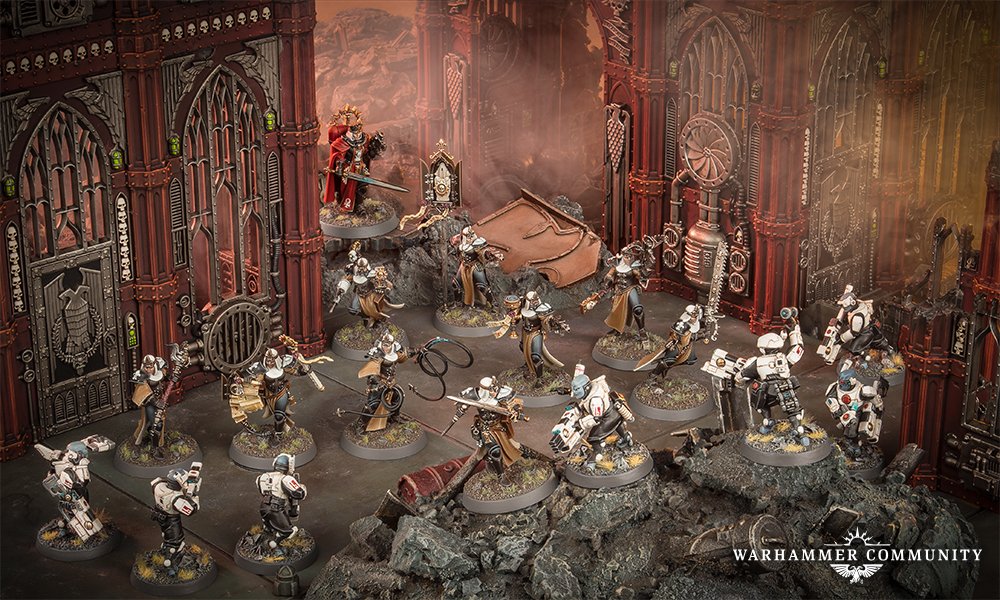
Como casi todos los demás juegos de Games Workshop (siendo Warhammer Underworlds la excepción más notable), Kill Team puede jugarse en tres modos de juego diferentes: Juego abierto, Juego narrativo y Juego igualado. Cada modo determina en gran medida cómo se juega, y todos ellos ofrecen experiencias de juego muy diferentes.
Juego abierto en Kill Team
Open Play is the most free-form mode of play. It gives you very basic rules for setting up your mission, and then basically tells you to do whatever seems the most fun to you. There’s no ongoing narrative or complex scoring system, but the Core Book has a list of ideas for how to choose interesting house rules that make your games fun and varied.
Open Play can be fun if you’re just trying to learn how the game works, but the other two game modes offer far more replayability and depth. To see how much you can do with an Open Play mission, check out the Kill Team battle report on Warhammer.
Juego narrativo en Kill Team
Just like in most other Games Workshop escaramuza games, Narrative Play is where the game really shows what it’s capable of. True to this edition’s design philosophy, Narrative Play in Kill Team is called Spec Ops Narrative Play. In Spec Ops games, you track the progress of your operatives from game to game using a Narrative Dataslate that you can photocopy from the Core Book.
Los agentes adquieren experiencia realizando determinadas tareas durante las misiones, que a su vez puede utilizarse para mejorarlos en diferentes árboles de habilidades de especialización, como Combate o Tirador. Estas mejoras se denominan Honores de Batalla, y añaden bastante profundidad al juego, ya que ayudan a distinguir mejor entre los distintos papeles en combate: Los especialistas de combate se vuelven mucho más peligrosos en el combate cuerpo a cuerpo, los especialistas exploradores se vuelven muy móviles y más difíciles de golpear, lo que es genial para conseguir objetivos en el otro extremo del tablero de juego, y así sucesivamente.
If things don’t go so well for your operatives, they can also suffer Battle Scars, detrimental effects ranging from simply dying and being removed from your dataslate to penalties to Movement or their Weapon skill.
También posees una Base de Operaciones que puedes mejorar con nuevas salas e instalaciones denominadas Activos Estratégicos, y puedes gastar Puntos de Requisición para obtener aún más bonificaciones.
The increased mechanics depth of Narrative Play is also evident in the games themselves: You have Spec Ops which are objectives that must be completed over a series of games (a bit like Achievements in video games), and there’s even a tiny extra “phase” before each game begins, where each player secretly selects a Scouting option that will give them bonuses or disadvantages depending on which Scouting option the opponent picked.
There’s almost too much stuff going on in Narrative Play, but if you know you’re going to spend every other Thursday playing a campaign with your friends, it’s great that the stories of your Kill Teams will be able to affect each other through so many different systems.
Juego igualado en Kill Team
En comparación con la gran versión wargame de Warhammer 40.000, la sección de reglas Matched Play es muy slim. The main draw of Matched Play in Kill Team is that you have a roster of operatives from which to choose your Kill Team, which means you can select the operatives you want for a specific game when you see what faction your opponent is playing. While this is a pretty small feature compared to all the stuff included in Narrative Play, it’s a great premise for fun tournaments with a lot of meta-speculation about how to build a roster with a counter for every faction you could possibly meet.
Playing Matched Play also lets you use Scouting in the same way as in a Narrative Play game, but otherwise it’s just playing missions against opponents, one game at a time.
Factions and “teams” in Kill Teams
Hay tantas facciones en Kill Team como en Warhammer 40.000, pero desde el comienzo de esta nueva edición ha quedado claro que el juego verá la aparición de nuevos Kill Teams con bastante frecuencia, así que no pierdas de vista qué Kill Teams tienes para elegir en nuestro resumen de todas las facciones de Kill Teamque actualizamos cada vez que sale un nuevo Kill Team.
Cómo crear un Kill Team
Building a Kill Team in this edition is a much more straightforward affair than in most other Games Workshop skirmish games. There’s no points system where each operative type and weapon has a certain cost that you’ll have to balance against a points limit for the mission you’re playing. Instead, there are clear rules for how many models each Kill Team can take, and what different operatives they have to choose from.
In some cases, this makes it very easy – and often quite inexpensive – to build your Kill Team. The new made-for-Kill Team kits such as Ork Kommandos and Death Korps of Krieg Veterans can be built from just one box of miniatures, and they have tons of special operatives that give your team flavour and great tactical options. This design philosophy makes the game really easy to get into. This simplicity was one of the big reasons why Grito de guerra became so popular, so I really hope the same thing will happen with Kill Team.
Equipos asesinos del Compendio de Kill Team book have rules for many different operatives from different miniature kits, but limits your kill team to using operatives from just one or two Warhammer 40,000 kits. While sometimes more expensive than the bespoke Kill Team boxes, this is still pretty easy to figure out. If you’re making a Heretic Astartes team, for example, you just need a box of Chaos Space Marines and a sprue of cultists.
Lamentablemente, nos tememos que la sencillez del libro Compendio no ha llegado para quedarse: En el número 468 de la revista White Dwarf, rules for a new Adeptus Mechanicus kill team was released, which lets you mix and match models from four different 40k unit types made from two different 40k kits. That’s still only two boxes you have to buy, but if you mix and match as much as you can, you’ll still end up with many redundant models from those boxes, and the game also becomes harder to read than when your opponent would only ever field one or two types of units in their Kill Team.
If this trend continues, and the Compendium was essentially just a placeholder for existing factions until new rules could be rolled out for them, the most fun you’ll have in this edition will probably be playing new bespoke teams against one another. Consult our Artículo sobre las facciones de Kill Team para ver en qué situación se encuentra tu facción favorita en cuanto a reglas para crear un equipo de asesinos.
Nuestro veredicto sobre Kill Team 2.0
Let me start this verdict by comparing Kill Team to another Games Workshop game that’s been popular among readers of this site. When the Age of Sigmar skirmish game Grito de guerra was released, it rekindled my love for Warhammer gaming with its idiosyncratic faction rules, streamlined combat and generally cinematic action gameplay. This new edition of Kill Team is doing something similar for my gaming enthusiasm – not because it is just like Warcry (it really isn’t), but because it is so full of interesting rules that depart from some of the staples of Games Workshop rules writing traditions.
I amor the new Fight system, the removal of the points system for building your Kill Team, and the promise of a steady stream of new bespoke Kill Teams being released. The game doesn’t feel streamlined or simplistic, but it seems that each rule has been written with the purpose of making the game exciting, fast and fun to play, without sacrificing complexity in the campaign system or the scenery rules, just to name a few.
I don’t love how the game has giving almost every mechanic a new name, to make it all seem more distinctly Kill Team-y. I could do without the geometric figures for measuring distances, and the “turns are now Turning Points” design that permeates much of the game.
Luckily, as soon as you start playing, all of that doesn’t matter so much. You can call a turn whatever you like.
I am also a bit worried about the ongoing accessibility and balance of the game, as I always am when Games Workshop starts churning out new expansions and White Dwarf Magazine updates for a game still in its infancy. Will the constant stream of new content make the game impossible to keep up with? Will only the newest Kill Teams be competitive in Matched Play? Will the whole thing just become an exhausting bloat of rules until it’s almost at 40k scale again? Time will tell, but right now, it’s an amazing skirmish game for players who might have found Warcry a bit too simplistic – there’s simply more rules and systems in Kill Team, and they’re excellently designed.
Otros grandes recursos:
Kill Team: Salvation — What Changed in 2024
Kill Team: Salvation launched in late 2024 as the major expansion for the current edition. It did not overhaul the core rules — the turn structure, activations, and phases described above all remain the same. What Salvation added:
The current core box for Kill Team. Includes Scout Squad vs Death Guard operatives, full rules booklet, tokens, terrain card, and double-sided board. Best entry point for new Kill Team players in 2025.
Check price on Amazon →- New factions: Scout Squad (Space Marines), Death Guard (Plague Marines), and Legiones Skitarii (Adeptus Mechanicus) were added with full datacards and tac ops
- New mission format: Salvation introduces a narrative mission arc with linked missions and campaign rules for ongoing play between the same two players
- Updated balance: Several existing faction datacards were adjusted via GW’s ongoing balance dataslate updates. Always download the latest free dataslate from the GW website before playing competitively
- New terrain rules: Salvation introduces specific terrain features with unique rules interactions that affect how cover and line of sight work in some missions
Best Way to Start Kill Team in 2025
The most efficient way to start Kill Team today is with a two-player starter set, which includes two complete warbands, the game board, all dice, tokens, and a rules booklet. This gives you everything needed to play your first game immediately. Individual warband boxes are also available if you already have a friend with their own warband and want to choose your faction specifically.
The free Kill Team rules and all faction datacards are available as PDF downloads from the Games Workshop website. You do not need to buy a physical rulebook to learn the game — the PDFs are complete and sufficient for play.
Kill Team vs Warhammer 40k: Which Should You Start With?
- Model count: Kill Team uses 5–20 models per side vs 20–100+ for full 40k. Kill Team is significantly faster to collect and paint.
- Game time: Kill Team games take 45–90 minutes. Full 40k games take 2.5–5 hours.
- Rules complexity: Kill Team’s activation-based system with individual model actions is more complex per model than 40k, but the overall game is shorter and more contained.
- Cost: A Kill Team warband costs $35–$80 vs $150–$500 for a competitive 40k army.
- Recommendation: Kill Team is the better starting point if you want to try the 40k universe without committing to a full army. The miniatures and painting skills transfer directly to full 40k if you later decide to expand.
Frequently Asked Questions
Do I need the Kill Team box set to start?
No — individual warband boxes are complete products. Two players can each buy a warband they prefer and play without a starter box, as long as they have a shared game board, dice, and tokens. The starter set is the easiest all-in-one option but not mandatory.
Are Kill Team rules free?
Yes — the complete Kill Team core rules and all faction datacards are available as free PDF downloads from the GW website. GW also releases balance dataslates periodically that adjust faction rules — these are also free.
How many models are in a Kill Team?
It varies by faction. Elite factions (like Plague Marines or Custodians) typically have 5–8 models. Horde factions (like Blooded or Wyrmblade) have 12–20 models. Each faction’s datacard specifies the exact squad size and operative options available.
Can I use my 40k models for Kill Team?
In most cases, yes — Kill Team uses the same physical models as Warhammer 40,000. Many Kill Team warbands correspond directly to 40k unit types. However, some Kill Team boxes include Kill Team-specific sprues with extra equipment options not available in the standard 40k kit. Check the specific warband’s datacard to confirm which models are valid before assuming your existing collection is compatible.